
THE RELATIONAL SOMATICS™ INSTITUTE
RELATIONAL SOMATICS™ PRACTITIONER CERTIFICATION
A certification in trauma renegotiation for coaches, therapists, and healers to meet your clients where talk therapy can't, in the body, in the nervous system, and at the root of how they relate to everything.
11 video modules. Two live practicums. Group mentorship. One supervised case study. You leave certified in the Relational Somatics Method™ and will be able to work at the level where change actually holds.
"Safety is the treatment." — Dr. Stephen Porges
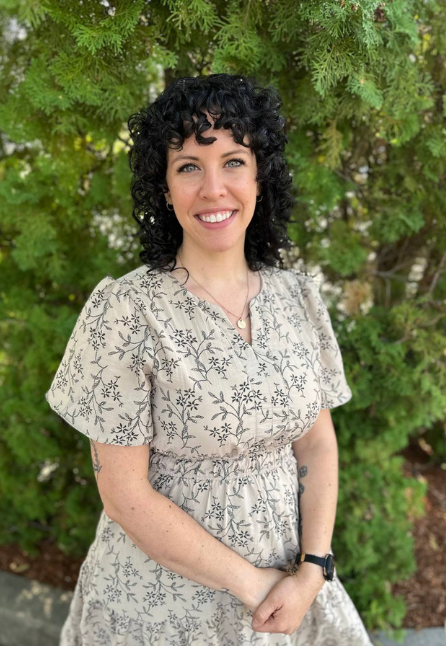
"I've had clients process trauma they'd been holding in their nervous system for years, in one session, sometimes two. Clients who used to go into emotionally dysregulated places are now able to slow down, connect with what their body is doing, and respond instead of react. My practice is where it's at because of the somatic work I'm doing, most of my new clients said they picked me because I work with somatics. Relational Somatics is the real deal."
Dr. Chrissy Summering, LCPC, Clinical Psychologist, RSP
Who This Training Is For
If you're a practitioner who cares deeply about your clients' results, and you're starting to suspect your current tools aren't enough, keep reading.
You're good at what you do. Maybe great. You show up fully prepared, you hold space beautifully, and your clients like working with you.
But something is missing.
They're gaining awareness. They're having breakthroughs in session. They leave feeling lighter, and then come back the following week in the same pattern, the same shutdown, the same cycle. You find yourself thinking: "Why isn't this working the way it should?"
It's not you, and it's also not them. It's that the missing piece was never in their mind, it's in their nervous system.
THIS TRAINING IS FOR YOU IF YOU ARE:
A Coach
who has hit the ceiling of mindset work. Your clients understand their patterns intellectually and still can't break them. You're ready to work at a deeper level and finally give them the tools to actually change.
A Healer
whether you work with breathwork, energy, yoga, or bodywork, who is ready to formalize your intuitive gifts with a nervous system framework that gives your work more precision, more safety, and more lasting results.
A Therapist
who knows somatic work is the missing piece but was never taught it in school. You want a structured methodology you can integrate into your existing practice with confidence and clinical integrity.
YOU'RE READY FOR THIS TRAINING IF:
Your clients are doing the work, but not getting the results they deserve
You want to understand the nervous system deeply, not just reference it
You're ready to add a body-led methodology to your practice
You believe healing happens in relationship, and you want to know how to be that relationship for your clients
You don't need to have it all figured out. You just need to know that what you're currently doing isn't taking your clients, or your practice, as far as it could go.
You're committed to your own growth as much as your clients'
What Is Relational Somatics™?
You already know that insight alone doesn't create change. Your clients can understand why they shut down, why they over-give, why they keep choosing the same patterns, and yet, they still repeat them. That's not a mindset problem. That's a nervous system problem.
The Relational Somatics Method combines cognitive awareness, somatic integration, and belief work to help people renegotiate the trauma stored in their nervous system, not just understand it intellectually, but actually complete it at the body level.
The word relational isn't just about romantic partnerships. We are in relationship to everything, our colleagues, our families, our past, our own bodies. And here's what we know to be true:
Rupture happens in relationship. Healing happens in relationship too.
The Relational Somatics Method teaches practitioners how to hold that healing container, how to track the nervous system, how to work with activation safely, and how to guide clients through the full cycle of trauma renegotiation using both the mind and the body.
This isn't a philosophy. It's a skill set.

The Relational Somatics Method™
Most trainings teach one layer. This one runs three at once.
"Safety is the treatment." — Dr. Stephen Porges

Cognitive Insight
Clients learn to recognize the beliefs, patterns, and relational templates formed from past experience, so the body's responses finally make sense.
Somatic Renegotiation
Tracking activation, working with incomplete survival responses, and creating the conditions for the body to finally complete what it couldn't before.
Identity Integration
Through Case File Work, clients don't just heal from the past, they orient toward the future. A new identity, embodied rather than intellectualized.
And here is the machinery that makes all three run.
01
The Pulse, the Anchor, and Oscillation
A healthy nervous system pulses, moving between activation and settling. Our model, The Pulse, teaches you to deliberately move a client between the Trauma Loop (dysregulated activation) and their Anchor (the felt sense of safety), a process called Oscillation.
What the client feels: activation stops being frightening.
02
SEEM: Sensation, Experience, Emotion, Memory
Your core tracking tool in every session, following a client from what's alive in their body right now, into the emotion it holds, and finally to the memory it belongs to.
What the client feels: their body finally has words.
03
The RSI Self System
You'll learn to work with the Wounded Self (witnessed, not fixed), the Protective Self (honored, never pathologized), the Resourced Self (the regulated adult who does the repair work), and the Embodied Self (the integrated identity a client is building toward).
What the client feels: the part that's been protecting them stops being the enemy.
04
The 8-Phase Case File Protocol
The complete session arc, from entry through sensation, to honoring the Protective Self, witnessing the Wounded Self, repair through the Resourced Self, and building a new, somatically-anchored identity that can actually compete with the old one.
What the client feels: a version of themselves that actually holds.
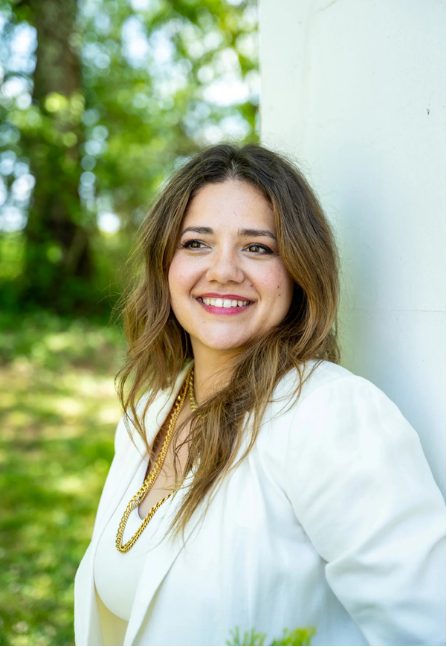
"I made back most of my investment before the certification was even done. I have eight one-on-one clients right now and just offboarded my first one who completed 12 weeks in my somatic immersive. I've gotten to see hundreds of hours of Lauren facilitating, and it's made the work so much more in my language and my approach. I love this work, I don't know what else I would do. This is what I'm supposed to do."
Madisen Rose Golden — Divorce Recovery Coach, RSP
What You'll Be Able to Do
By certification, you will:
✓ Work at the level where lasting change actually happens, the nervous system, not just cognitive insight
✓ Read the autonomic nervous system in real time, including Polyvagal states and the four survival responses
✓ Move a client through activation without retraumatizing them, using Oscillation and Dosing
✓ Run the full 8-Phase Case File Protocol from entry through identity-level integration
✓ Facilitate renegotiation of emotional, physical, and sexual trauma with appropriate pacing and care
✓ Know precisely where your scope of practice begins and ends
✓ Call yourself a certified Relational Somatics Practitioner
The Certification Pathway
RSI Coursework - Includes 11 Video Modules
Self-paced, on-demand.
Begins October 19th.
Module
One: Foundations
Two: Anchoring & the Window of Capacity
Three: Oscillation & Dosing
Four: Speaking the Language of the Nervous System
Five: Linking, Tangled, Scattered & Chronic Activation
Six: Trauma Renegotiation
Seven: Neuroplasticity & Selective Attention
Eight: The RSI Self System
Nine: The Case File Protocol — Somatic Work
Ten: The Case File Protocol — Identity & Case File Work
Eleven: Ethics, Scope of Practice & the Facilitation Role
Nervous System, Polyvagal Theory & Attachment
Establishing safety before activation work begins
Moving clients into and out of activation safely
The SEEM framework
Recognizing disrupted nervous system patterns
Emotional, Sexual & Physical trauma
The neuroscience of lasting change
Wounded, Protective, Resourced & Embodied Self
Phases One through Five
Phases Six through Eight
Where your work begins and ends
Covers
Practicums are capped to 10 students. Real feedback and attention, not a lecture hall.
Practicum One — Foundational Somatic Work
Prerequisite: completion of coursework modules 1–4
Focus: general somatic foundations tracking the nervous system, entering through sensation, assessing capacity and window of tolerance in real time, bridging sensation to emotion to memory, and basic orientation to the self system (wounded self, protective self, resourced self). This practicum builds the groundwork rather than running the full Case File Protocol.
16 contact hours
Practicum Two — Identity & Cognitive Work
Prerequisite: completion of Practicum One and all remaining coursework modules (5+)
Focus: all 8 phases of the Case File Protocol, start to finish. Meeting and honoring the self system, facilitating repair, building the new case file, orienting to identity, repetition and rewiring, and running the complete arc with coherence and attunement.
16 contact hours.
Case Study & Certification
Submit a recorded client session for review against somatic tracking, RSI self system, real-time capacity assessment, repair facilitation, and case file work. Submit within one year of completing Practicum Two. Upon approval: Relational Somatics Practitioner.

What This Makes Possible in Your Practice
This is a business decision as much as a clinical one.
Certified practitioners work at a depth most coaches can't offer and most therapists were never trained in. That changes what you can charge, who refers to you, and how long clients stay.
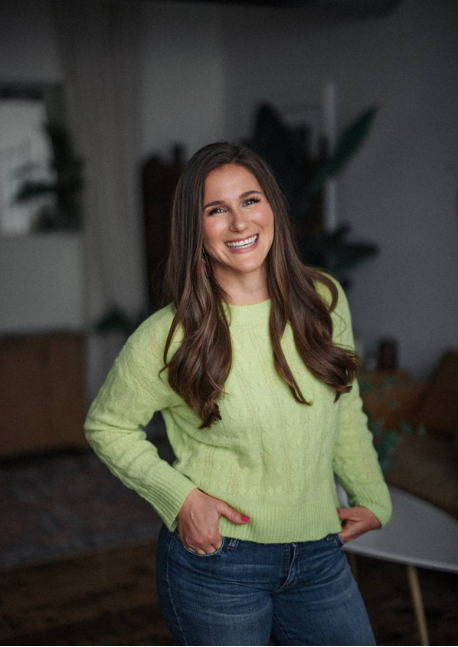
"My first somatic experience was breath work - embodiment, but no integration after. I was certified elsewhere because I thought that was "somatic work". Then, I found the Relational Somatic™ Method, and I realized, this is the way you actually change your life and the lives of the people you serve, renegotiation tools that support you and help you listen to the wisdom of your body, instead of forcing it."
Emma Schuster — Founder, Somatic Liberation, RSP
Who This Training Is Not For
We'd rather lose your application than take your money for the wrong program.
You're looking for a quick certification.
This is a real commitment spanning coursework and two live practicums. There is no weekend version, no shortcuts, and no certificate handed out for just showing up. The practitioners who get the most out of this program are the ones who come ready to go deep, not just add letters after their name.
You want a script to follow.
The Relational Somatics Method is not a paint-by-numbers protocol. It requires you to develop real skill, real attunement, and real presence. If you're looking for a rigid step-by-step system you can apply without thinking, this is not that.
You're not willing to do your own work.
This might be the most important one. You cannot take clients somewhere you haven't been willing to go yourself. This training will ask you to look at your own nervous system, your own relational patterns, and your own unfinished healing. That's not a warning. That's the point.
The practitioners who thrive in this program are the ones who understand that becoming a great facilitator and becoming a more whole human being are the same journey.
What's Included
THE RSI COURSEWORK
11 video modules, self-paced, yours from the day you enroll. 10–15 hours covering Polyvagal theory, attachment, anchoring, oscillation and dosing, the SEEM framework, trauma reintegration, neuroplasticity, the RSI Self System, and the complete 8-Phase Case File Protocol.
Value $9,000
PRACTICUM ONE — SOMATIC & PARTS WORK
15–20 live contact hours in a small group, capped at 10. Real feedback on your actual facilitation.
Value $5,000
PRACTICUM TWO — IDENTITY & COGNITIVE WORK
12–16 live contact hours, including a full integration session where you hold the complete eight-phase arc with a volunteer.
Value $5,000
CASE STUDY REVIEW
Submit a recorded client session for individual review against somatic tracking, RSI parts language, capacity assessment, repair facilitation, and case file work.
Value $2,500
THE CREDENTIAL
Certified Relational Somatics Practitioner.
-
Total Value
$21,500
Investment
$9,997
For the complete certification pathway — coursework, both practicums, and your case study review.
PAYMENT PLANS AVAILABLE
FAQ
-
Most approaches work at the level of insight — helping clients understand their patterns. Relational Somatics adds the missing piece: a structured way to work with the nervous system directly, so change happens at the body level, not just the cognitive one.
-
No. Relational Somatics™ is its own modality with its own defined scope, and you'll spend an entire module learning exactly where that scope begins and ends. If you do hold a clinical license, these tools integrate inside your existing scope — many of our practitioners are licensed therapists adding a body-based methodology their graduate program never taught.
-
Attendance is mandatory for all days and hours of the practicum. This protects the integrity of the cohort and the learning experience for all participants — no exceptions are made. Whether a student misses a session or needs to cancel for any reason, they are removed from that cohort and must enroll in a future practicum to complete it, which carries a $400 fee.
-
Practicums are kept small, less than 10 people so you get real feedback and attention, not a lecture hall experience.
-
Most people who ask this are more ready than they think. What matters isn't how much you already know about the nervous system — it's whether you're willing to learn a new way of working and do your own work alongside it. If you're genuinely unsure, book a call. We'll tell you honestly, including if the answer is not yet.
-
Relational Somatics™ is an independent certification and its own modality. It is not an accredited degree or clinical licensure program. It was intentionally created to make relational and nervous system work accessible to coaches, healers, and helping professionals, not only licensed clinicians.
A NOTE TO THE PRACTITIONER STILL SCROLLING
You've read this far because something in it is true.
You have a client in mind right now. Someone who does the work, shows up every week, understands their pattern completely, and is still living inside it. You've tried what you know. You've been good at it. And you can feel the edge of what your training gave you.
That edge is not a failure of your skill. It's the boundary of a toolkit that was never built to reach the nervous system.
Practitioners don't usually arrive here in a moment of crisis. They arrive on an ordinary afternoon, between sessions, after one more client leaves lighter and comes back the same.
You can keep working at the edge of what you were taught. Or you can learn the thing that goes past it.
Next cohort begins October 19th, 2026
Not sure if it's the right fit?
Book a call with our team. They'll tell you honestly whether this is right for you — including if the answer is no.